Every week someone asks if AI is coming for their team. Fair question. The answer is narrower than the panic, and more useful than “just learn prompt engineering.”
Search “Grok” and you mostly get the chat model. The product we watch closely is Grok Bot: named AI teammates that can work inside your email, calendar, and tools, not just type in a chat window. If you already pay for Cursor, it is part of that world. That is what we mean when we say bots take over tasks, not people.
Grok Bot vs “just Grok”
Grok Bot is built for work that repeats. You give each bot a job: research prospects, prep expenses, summarize your week. They can run at the same time, pass tasks between each other, and save a workflow after you approve the first run. They plug into email, calendar, Slack, and the CRM you already use.
Grok Bot is not the only option. Claude, ChatGPT, Copilot, and Gemini all push in the same direction. Zapier and Make still connect apps when you need simple triggers. Some firms run private bots on internal data only. Others hire help to build a custom setup when off-the-shelf tools do not fit security or industry rules.
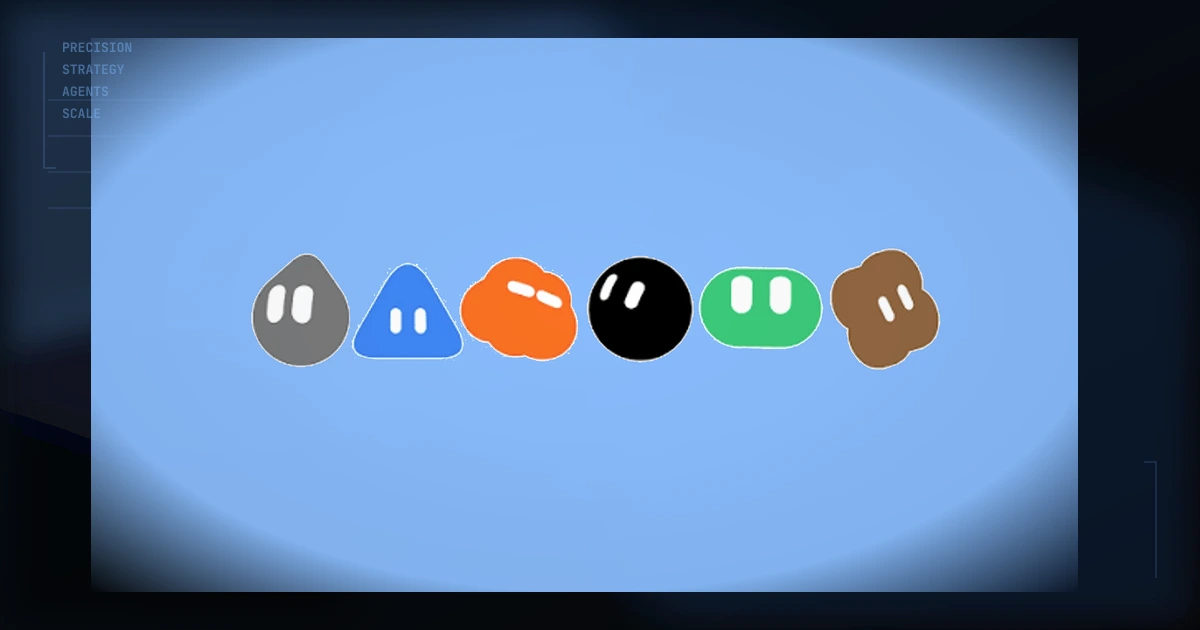
At CHING 7 we like how Grok Bot presents itself: clear roles, distinct bot characters, and product branding that reads instantly (xAI’s design team documented the thinking behind those shapes on their site). We are also exploring custom-made agentic setups when off-the-shelf products do not match security, data residency, or niche industry rules. Grok Bot is our current daily driver inside Cursor, not the whole map.
What we are doing with Grok Bot at CHING 7
We downloaded Grok Bot in Cursor, spun up named bots, and grouped them like a lightweight team. One lane fetches context: bookmarks, inbox threads, form leads, notes from discovery calls. Another drafts outreach to potential clients in our voice, with packages and boundaries baked in. A third handles the boring reconciliation side: who was invoiced, who needs a nudge, what landed in spam.
Nothing sensitive auto-sends. Our accounts lead still owns client experience and the final click on sales mail. On delivery, bots gather specs and links; our developers review, build, and ship. The win is speed and coverage, not removing accountability.
If that sounds open-ended, it is. Agentic work is a new surface area. You are not failing if the first week feels experimental. You are early.
Which jobs change first (and which do not)
Not the strategist who sets positioning. Not the surgeon’s judgment in the room, whatever viral clips claim about the far future. The work that compresses first is repetitive coordination: invoice chasing, CRM hygiene, first-pass outreach, meeting prep, renewal pings, checklist audits.
You will see hot takes, including Elon Musk on video speculating that even surgeons could be touched someday. We do not plan client businesses around that headline. We plan around what is already here: dull tasks automated, strategy and relationships left to people who know the customer.
- Chasing invoice status and reconciling who paid which currency.
- Logging leads from forms, DMs, and email into one place with consistent tags.
- Research plus draft outreach: angle, contacts, human edit, send.
- Optional “chief of staff” or “CFO prep” bots that assemble numbers for review, not sign checks alone.
How businesses and individuals should respond
Companies should redesign workflows, not just buy seats. Decide what must stay human: pricing, contracts, brand voice, escalation on angry customers. Automate the loops around that core. A three-person shop can feel like ten if bots run overnight on research and prep while founders sleep.
Individuals facing a role squeeze should lean into expertise agents cannot copy from a generic model: industry judgment, relationships, taste, and war stories from years on the job. Package that as a personal service. Use Grok Bot or similar to strip out the team-of-assistants work so one person can run pipeline, delivery, and follow-up without pretending to be a 40-person agency.
Upskilling is not learning to code overnight. It is learning to direct agents: clear briefs, approval habits, and knowing when to ignore the draft.
Where CHING 7 fits
We are a strategy, design, and build partner. Automation is not a side hobby. We look at how you sell today, which tools you already pay for, and where data is messy. Then we recommend a fit: Grok Bot inside Cursor, Zapier or Make, a custom setup on your own hosting, or a mix.
For each client the scenario differs. A quote-heavy wholesaler needs different routines than a studio selling retainers. We train voice and boundaries, document sources of truth, add review gates, and measure whether prospects and revenue move. If Grok Bot is wrong for you, we will say so.
Training beats prompting
A one-off prompt is a party trick. A trained workflow is an asset. Our checklist:
- Voice and boundaries: what the bot may say, what escalates to a person, which numbers are off limits.
- Source of truth: CRM fields, catalogs, rate cards, read-only vs write access.
- Review gates: auto-send only for low-risk templates; everything else queues for a quick human scan.
- Measure what matters: time saved, quality held, did prospects move. Tighten or kill routines that fail.
Agentic bots are not unlimited magic. They need clean data and someone willing to say no to a bad automation. When those pieces exist, the upside is real: more touches with prospects, fewer dropped balls on accounts, founders who stop being the person copying and pasting between every tool.
Everyone should at least look at Grok Bot if they are already on Cursor. If the setup feels unclear, that is normal. Bring us your stack and we will help you explore what to automate first.
What is the one recurring task you would hand to a named bot tomorrow if you trusted the guardrails?